

“Wake up, Neo…”
~Morpheus through Neo’s computer, The Matrix
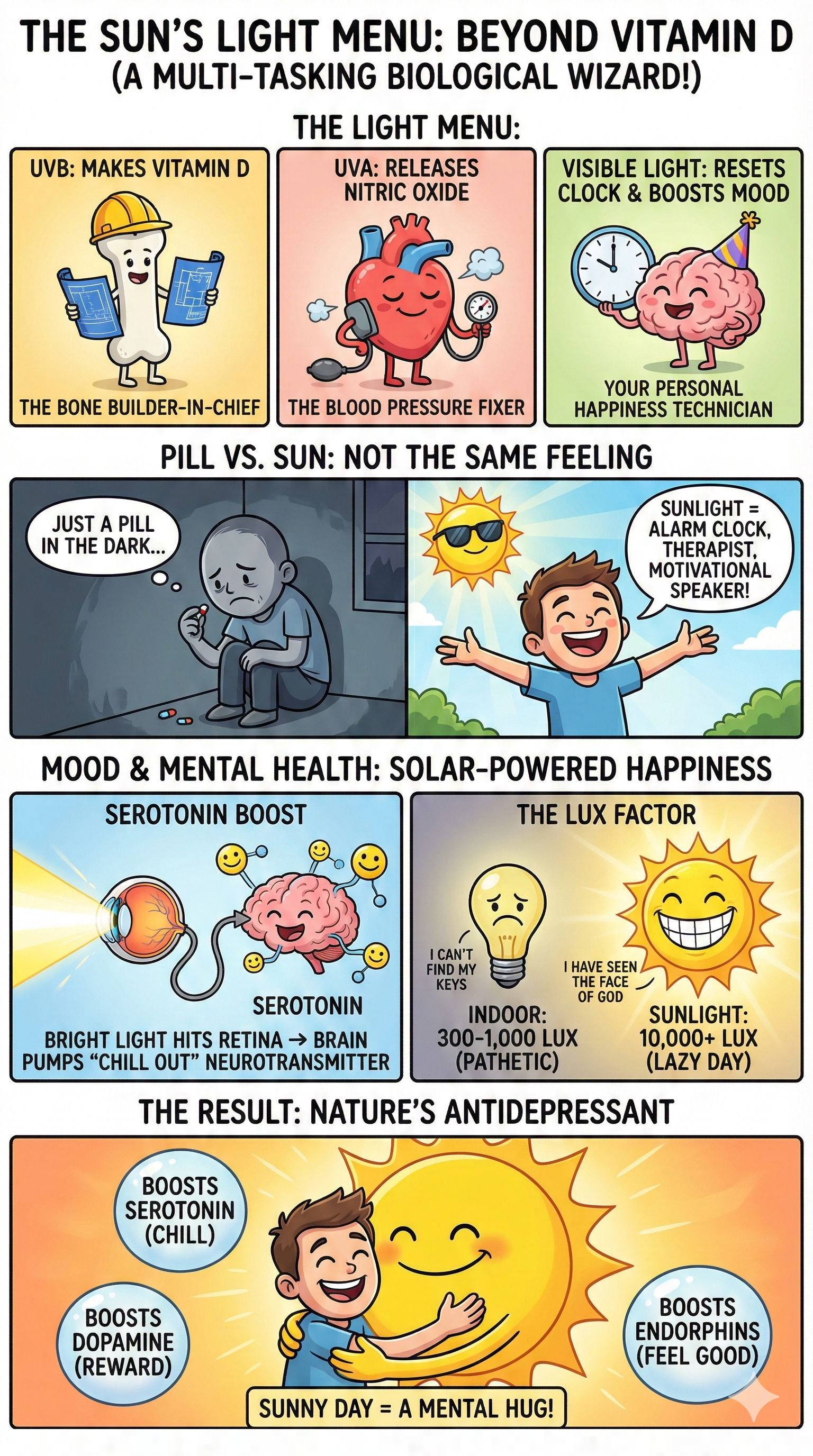
Vitamin D gets most of the hype, but it’s far from the sun’s only talent. The sun is basically a multi-tasking biological wizard that tinkers with your brain, blood, and immune system all at once.
Here’s the Light Menu:
- UVB: Makes Vitamin D (the bone builder-in-chief).
- UVA: Releases Nitric Oxide (the blood pressure fixer).
- Visible Light: Resets your brain clock and boosts mood (your personal happiness technician).
This explains why popping a vitamin D pill in a dark room doesn’t feel the same as actually stepping outside. Your brain basically uses sunlight as its alarm clock, therapist, and motivational speaker.
Mood & Mental Health: Solar-Powered Happiness
Ever notice how everyone is miserable in February? That’s not a coincidence.
- Serotonin boost: Bright light hits your retina, telling your brain to pump out serotonin (the “chill out” neurotransmitter).
- The Lux factor: Indoor lights are pathetic: 300-1,000 lux. Sunlight is 10,000 on its lazy day. Your brain knows the difference.
- The result: Sunlight is nature’s antidepressant. It boosts serotonin, dopamine, and endorphins, which is why a sunny day feels like a mental hug.
Sleep: Resetting the Master Clock
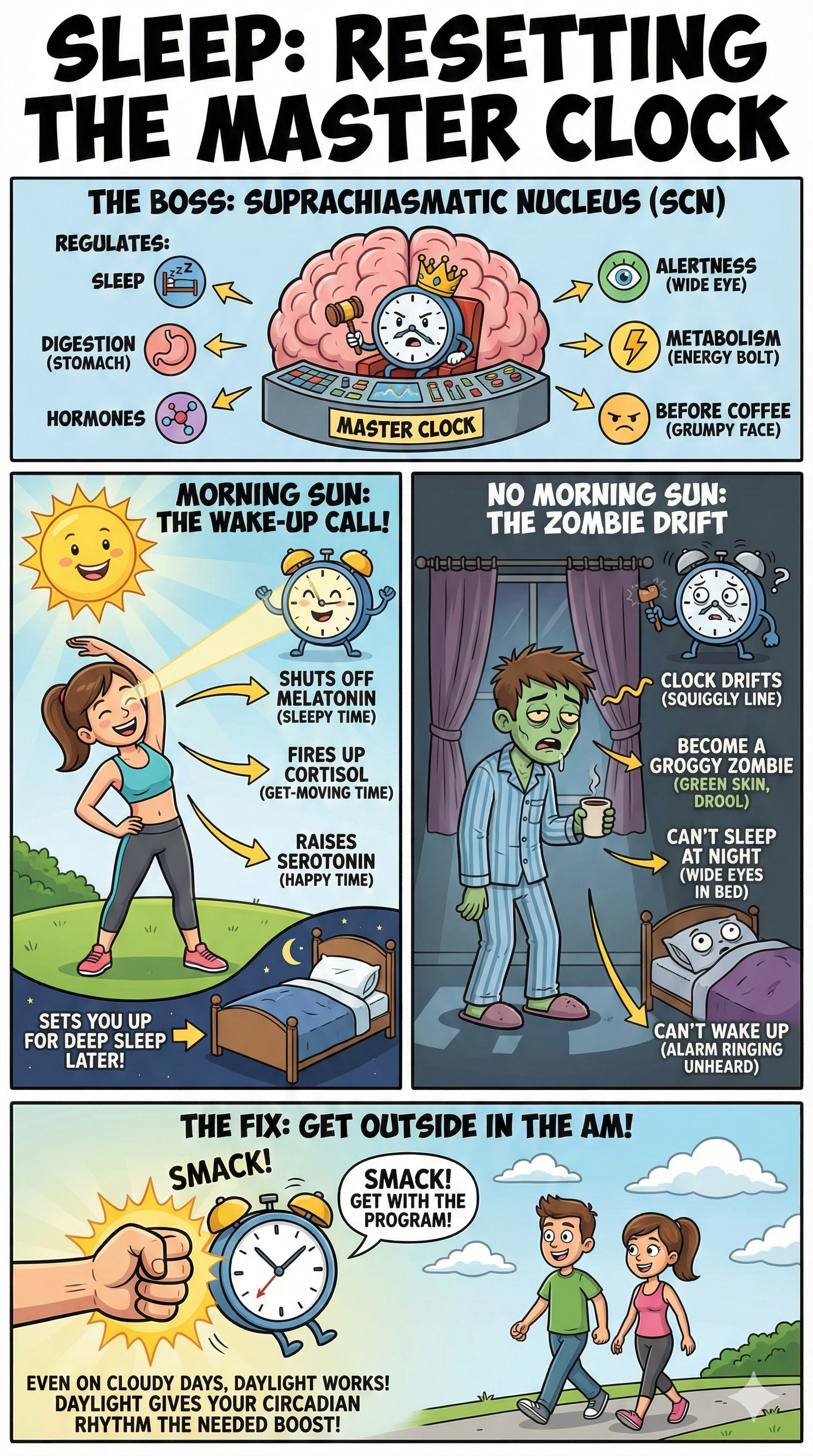
Inside your brain lives a tiny but bossy cluster of neurons called the Suprachiasmatic Nucleus (SCN). It’s the brain’s master clock that regulates pretty much everything: sleep, digestion, hormones, alertness, metabolism, even your ability to not yell at people before coffee.
- Morning sun: Tells the SCN to shut off melatonin (sleepy time) and fire up cortisol (get-moving time) and raise serotonin (happy time). It sets you up for deep sleep later.
- No morning sun: Your clock drifts. You become a groggy zombie who can’t sleep at night and can’t wake up in the morning.
- The fix: Get outside in the AM! Even on cloudy days, daylight gives your circadian rhythm the smack-it-on-the-back-of-the-head it needs to get with the program.
Heart Health: The Secret Gas
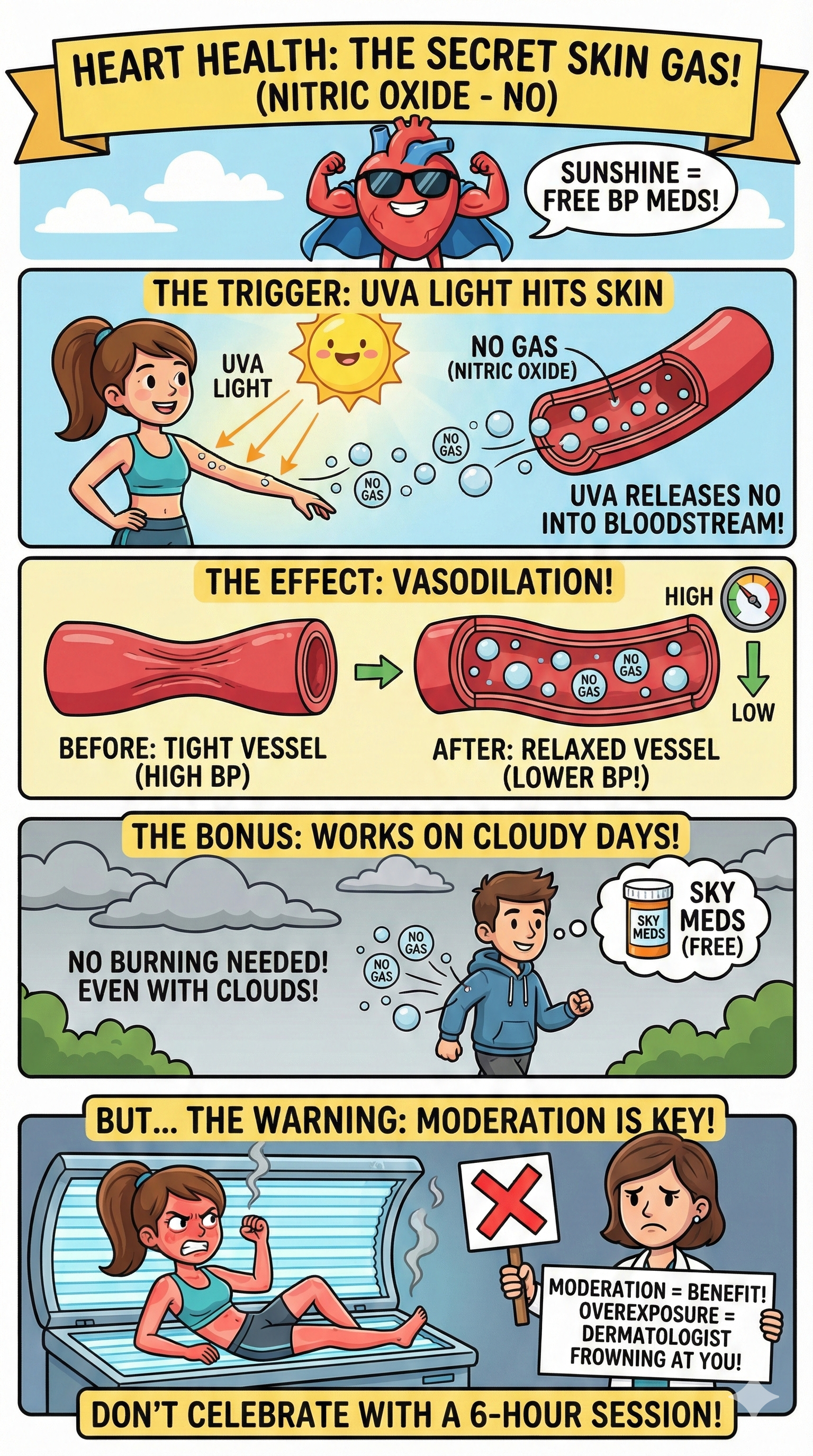
Here is a weird one: Your skin stores Nitric Oxide (NO).
- The trigger: When UVA light hits your skin, it releases this gas into your bloodstream.
- The effect: It relaxes your blood vessels (vasodilation), lowering your blood pressure naturally.
- The bonus: This happens even on cloudy days and doesn’t require burning. It’s like a free blood pressure medication dispensed by the sky.
But don’t celebrate with a six-hour tanning session: once again, moderation = benefit, overexposure = dermatologist frowning at you.
The Immune System: Defense & Tolerance
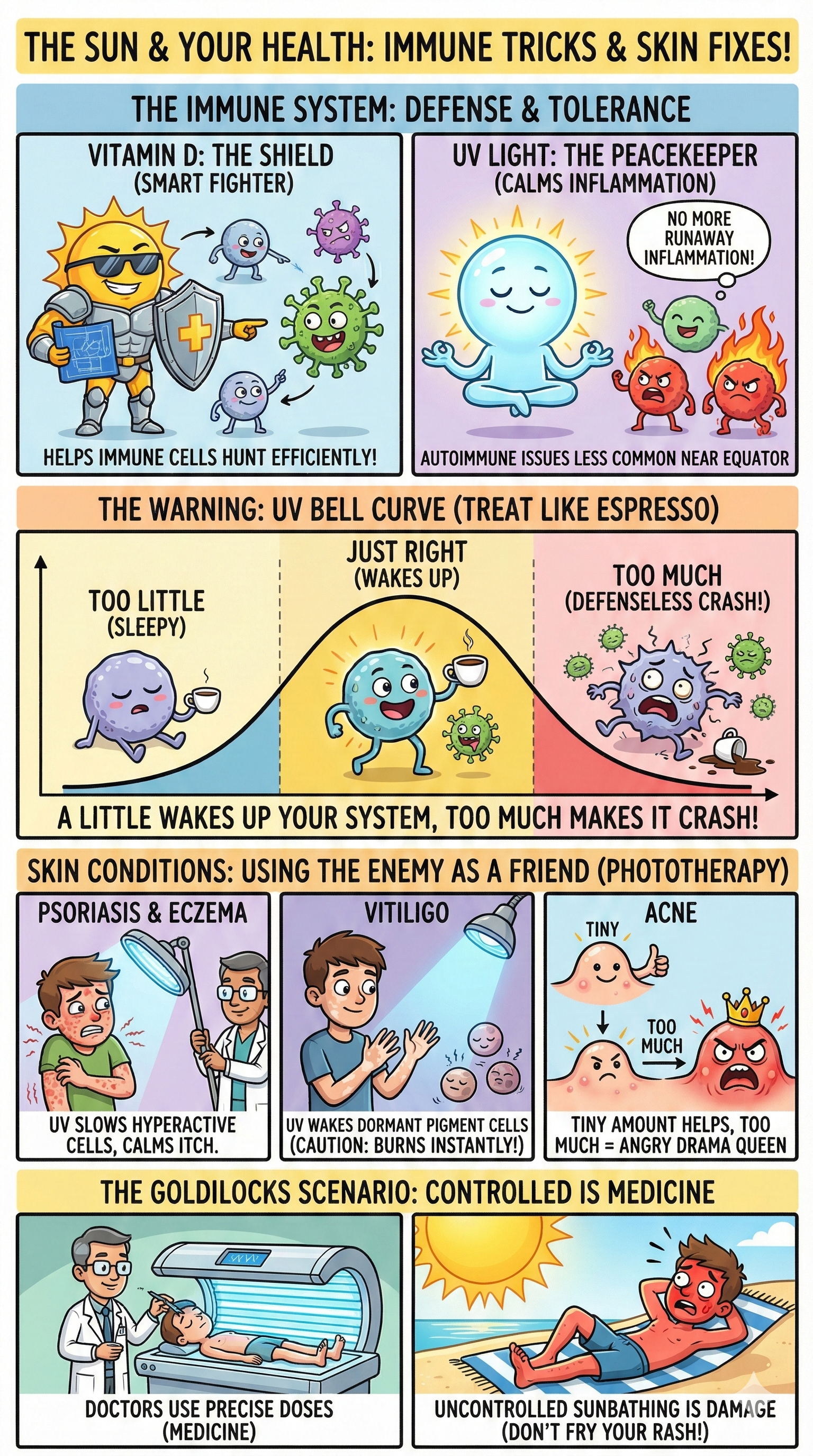
Vitamin D plays the big role, helping immune cells fight smarter, not harder, but sunlight adds bonus immune tricks up its sleeve.
- The shield: Vitamin D helps your immune cells hunt down viruses more efficiently.
- The peacekeeper: UV light calms down overactive immune responses (runaway inflammation). This is why autoimmune diseases like MS are less common near the equator.
- The warning: Too much sun suppresses immunity. It’s a bell curve: a little bit helps you fight; a lot makes you defenseless. Treat UV like espresso: a little wakes up your immune system, too much makes it crash.
Skin Conditions: Using the Enemy as a Friend
Doctors literally use UV light machines (phototherapy) to fix some skin problems.
- Psoriasis & eczema: UV slows down hyperactive skin cells and calms inflammation and itching.
- Vitiligo: UV can wake up dormant pigment cells and gently encourage them to repopulate pale areas. Note that depigmented patches burn instantly, so caution is non-negotiable.
- Acne: A tiny amount of UV may help. Too much turns pimples into angry, inflamed drama queens.
But remember, this is a “Goldilocks” scenario. Controlled UV is medicine – doctors use measured wavelengths and precise doses; uncontrolled sunbathing is just damage. Do not try to cure your rash by frying yourself on the beach.
END OF CHAPTER